Travel Trends of 2025
Demand and competition both are rapidly increasing in the travel industry. In such a highly competitive industry it becomes important for the Destination Management Companies (DMCs) to keep up with all changes taking place. Whether in consumer demand, cross-border regulations, travel technology or in AI, a lot of trends are emerging.
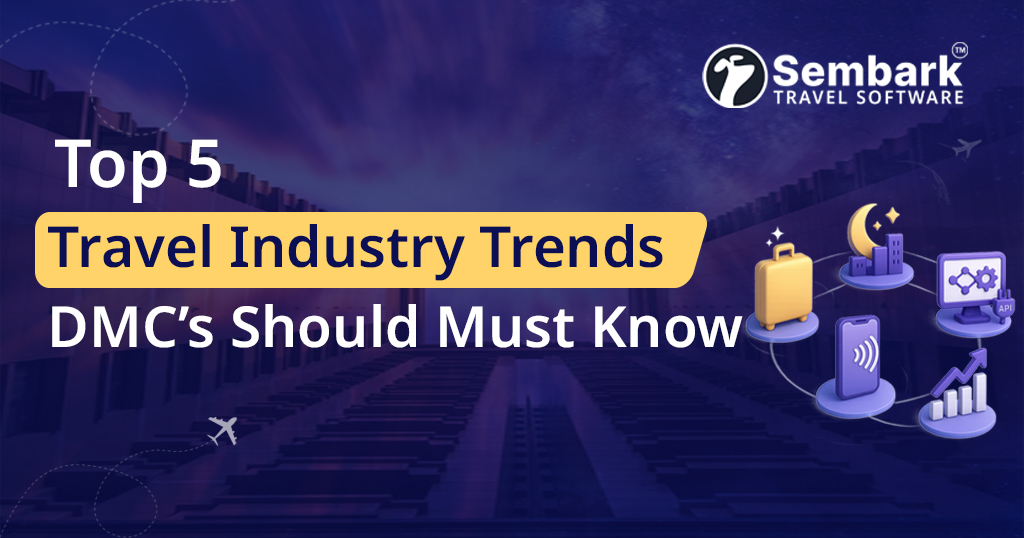
Here are some important changes taking place in the travel industry in 2025 that a DMC should be aware of.
Evolving Market of Luxury Travellers
According to McKinsey the luxury travel market is transforming, breaking every perception related with the customers segment. Whether it is age, income, nationality and more– the dynamics is evolving.
It has been highlighted in McKinsey’s data that the luxury travel demand is no longer restricted to the ultra-wealthy market segment. In fact, 35% of the luxury travellers are the individuals with net worth between $100,000 to $1 Million.
For DMCs this shift indicates that the new segment of the luxury travel market is more driven by value-based traveller; people are willing to spend a little more as they cherish more experiences. Which means people who seek premium experience but also calculate the cost & benefit. Luxury in specific needs to be redefined by the DMCs to cater the demand of the modular luxury consumer segment. Example not just the 5 Star Hotels but beautifully curated hotels or instagram worthy hotels should also be included in the options.
Contactless Experience
Technologies have been evolving fast in the travel industry. Mobile applications, online payments, real-time updates are what customers demand now. It has been seen that now travellers prioritise convenience and safety which is driven by technology. They want real time updates of changes, or delays since it helps them in fast decision making. Online methods of payment help travellers keep an easy record of expenses and also gives safety since they don’t have cash in hand as a liability.
Clients select companies offering fast and convenient services through technology. Digital-First DMCs are able to secure more conversions in comparison to the travel business using traditional methods.
Nocturnal Tourism
It can be seen that nowadays consumers prefer hyper personalised packages with itineraries that strictly focus on their preferences. One of the major changes that has come in the preference of travellers now, is that they have started embracing night experiences more. It can be seen that the demand for exploring destinations at nighttime has been increasing. Currently travellers seek for experiences such as stargazing, after our museums or night markets more.
This change in demand of increasing nocturnal tourism directly impacts DMC also. Since it brings the requirement of expanding their current portfolio and transforming the itinerary according to the demand. Changes in coordination also need to be developed within customer service for 24/7 assistance. Plus with the on-ground support staff for late evening plans to manage this demand in the coming future successfully.
Modular Travel CRM with Integrated API
Travel CRM software is one of the biggest blessings for travel businesses. Several common disruptions that travel businesses face in handling their daily operation can now be turned into opportunities of scaling their business.
Travel CRM software not only automates operations, such as lead management, payment, tracking, real time, visibility, and reminders, but it also helps in eliminating repetitive tasks for a travel business by generating instant vouchers or creating itinerary in 60 seconds. Travel CRM software such as Sembark travel management software brings an all in one solution for a DMC to manage back office operations seamlessly. Travel businesses shifting to digital tools have acknowledged 20% to 35% faster improvement within profits as well as consumer experience.
So for DMCs this change isn’t something which will be arriving in the future, but it is something happening now. Travel CRM software is rapidly transforming the travel market by giving better speed, scalability and opportunities of growth which your competitors have already adapted.
Data-Driven Decision Making
The travel industry has become very unpredictable in the past few years. From changing dynamics between countries, wars or cross-border regulation changes– fluctuations in tourism are constant. To handle the unpredictable fluctuation utilisation of analytics has increased in the travel businesses. Currently travel businesses, including DMC, travel agents, or tour operators globally have been utilising proactive strategy for predicting the future demand.
Plus another aspect in which data & analytics is being used by travel businesses is to get insights of consumer segmentation or pricing. For example, the decision of future inventory is made after evaluating the performance of that destination, activity or hotel in the previous season.
It has become important for the DMC to shift from traditional methods to digital methods of record keeping. Without proper log and documentation of consumer preference decisions can’t be made efficiently in the current environment of the travel industry. Along with all of this data driven decision making brings consistency in profit for a Destination Management Company.
Conclusion
In order to survive a highly competitive market like travel it is crucial that travel businesses are not afraid of change but embrace change. Whether it is future planning or current decision making trends help DMCs or any other travel business bring consistency within profit and future growth opportunities at the same time.
Recommended Blogs: