
Let’s talk about something most travel business owners deal with every season of their business but rarely have the chance to sit down and address properly.
When you run a travel business, it means working with dozens of suppliers at all times, be it hotels, transport vendors, or activity operators, each with their own contracts, rate sheets, billing methods, validity terms, and much more. Managing all of this manually means your travel supplier management system is essentially a collection of spreadsheets, email threads, and downloaded PDFs, spread across your team.
And when all of that is managed manually, things slip – not dramatically or intentionally, but quietly. A wrong rate on a quotation, a contract that expired last month, a billing dispute your team cannot settle quickly because the right contract cannot be found in time.
Year after year, these things happen and get accepted as a normal cost of doing business until the losses add up, and it becomes an actual problem that is impossible to ignore.
Sounds Familiar. Right?
Now imagine this: Someone from your sales team is building a quotation for a group of enquiries. They open the rate sheet they have been using all year, add all the hotels and transport prices, and send it out. The client confirms and sends the advance. Everything looks good. Two weeks later, your operations team contact the supplier to confirm and get a different rate. Turns out the suppliers have sent revised rate sheets, but your team never updated them in their working file. Now, what happens is that the difference quietly comes straight out of your margin.
On the surface level, it may seem like an employee problem, but if you take a closer look, it is a management problem that shows up in more places than just outdated rates.
Where It Actually Goes Wrong
Let us talk about what manual supplier management actually costs you.
Managing Supplier Rate Sheets Across The Team Is A Constant Problem:
- Is your team tracking, updating, circulating, and managing every supplier rate sheet manually?
- Or does your team have to work out of a shared Excel sheet that anyone can accidentally edit at any time?
With no centralised platform, there is no single accurate source for your supplier management data.
Supplier Service Details Remain Scattered, And Every Quotation Pays The Price:
- Do you have every supplier’s service details like hotel amenities, transportation options, and tour activities scattered across Excel tabs, PDFs, & old email threads?
Building a quotation means digging through all of it every single time.
Supplier Contracts Expire Without Anyone Noticing:
- When a contract lapses, is there any alert, a flag, or a system to catch it?
Bookings keep going out at old contracted rates until someone notices.
Sales & Operations Not Working From The Same Numbers:
- Is it normal that your sales team builds a quotation using the rates they have on file, while your operations team confirms the booking with the supplier using a different version?
One updated, one not, and by the time the mismatch surfaces, it is already too late to fix it.
If any of these questions felt familiar and you have no answer for them, this is because they are not random mistakes. They are what happens when supplier data and contracts are uncontrolled. And that is exactly what Sembark’s Supplier and Contracting Management is built to fix.
This Is What Changes With Sembark
This is where each of those problems gets a specific fix, starting with the most fundamental one.
- All Your Supplier Data Lives In One Centralised Place
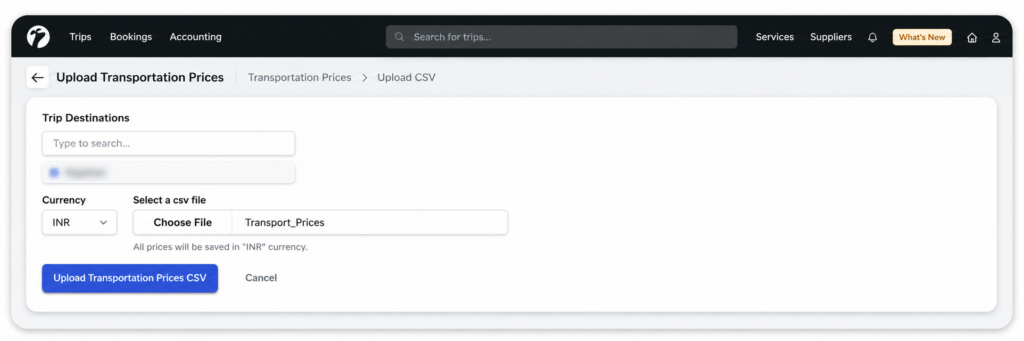
You can bring all your existing supplier data into the system in bulk through a safe, encrypted interface, so that, from day one, your entire team works from a single centralised supplier rate sheet, standardised across the organisation. Now there are no separate files per person and no version-related confusion.
- Updates Can Be Done In Bulk – One Change Everywhere
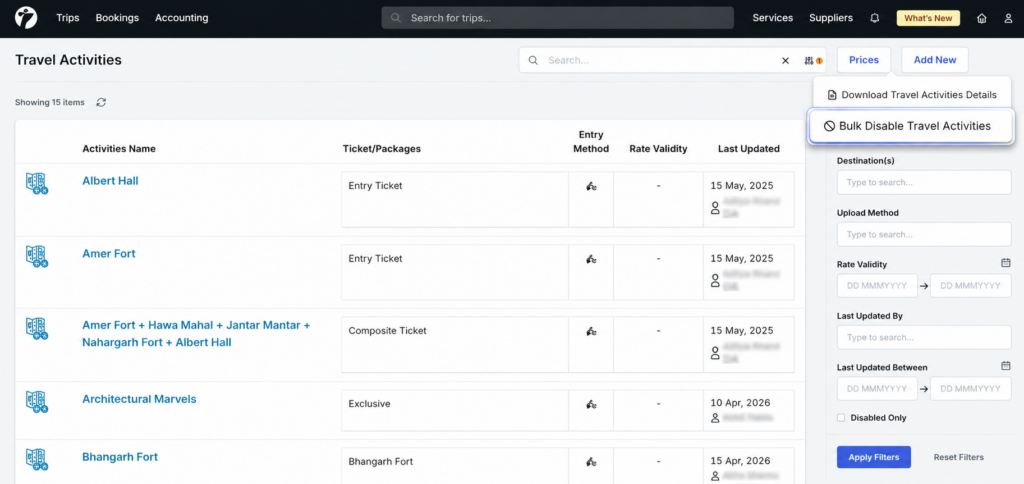
When a supplier sends new or revised rates, your team can update them in the system using bulk enable & disable options in just a few clicks. Every quotation built after that automatically uses the updated rate. No need for re-sharing files, and no risk of anyone working from an outdated contracted rate sheet.
- Access Is Controlled By Role, Data Type & Department
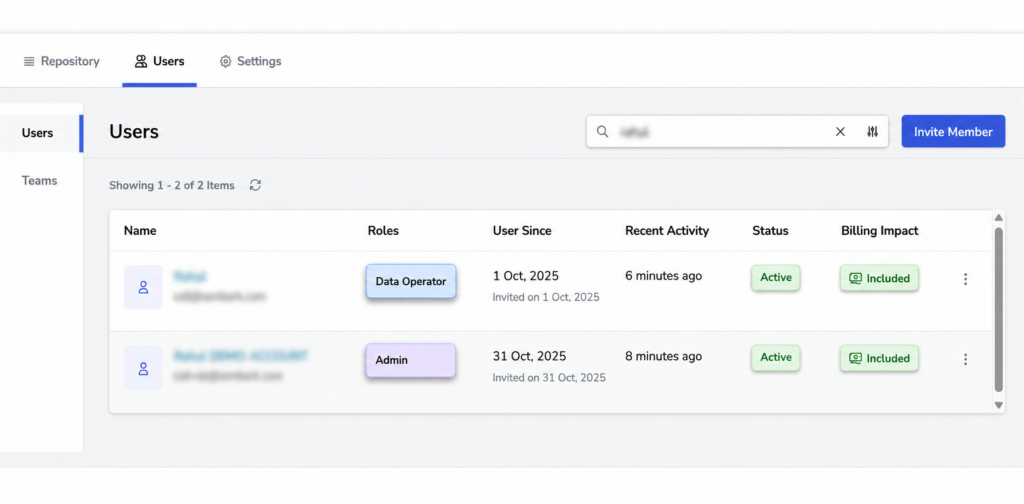
Who can view, edit, or delete contracted rate data is decided by user role, data type, and department. Only authorised team members can make changes within their scope, ensuring your supplier rate sheets and contract-related data stay accurate. Therefore, no accidental or unauthorised edits go unnoticed.
- Contracts and Supplier Service Data – Stored Centrally & Found In Seconds
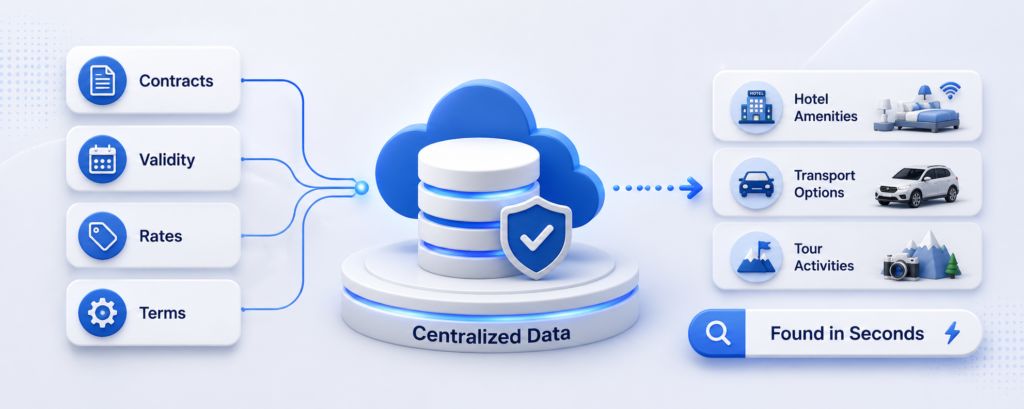
All your supplier contracts, including contracted rates, terms, rate rules, validity dates, and pricing logic, are uploaded and managed centrally in the system. Also, all supplier service-related data, including hotel amenities, transportation options, and tour activities, is stored as master data against each supplier.
- Correct Contracted Rate Auto-Applied – No Manual Date Checks Needed
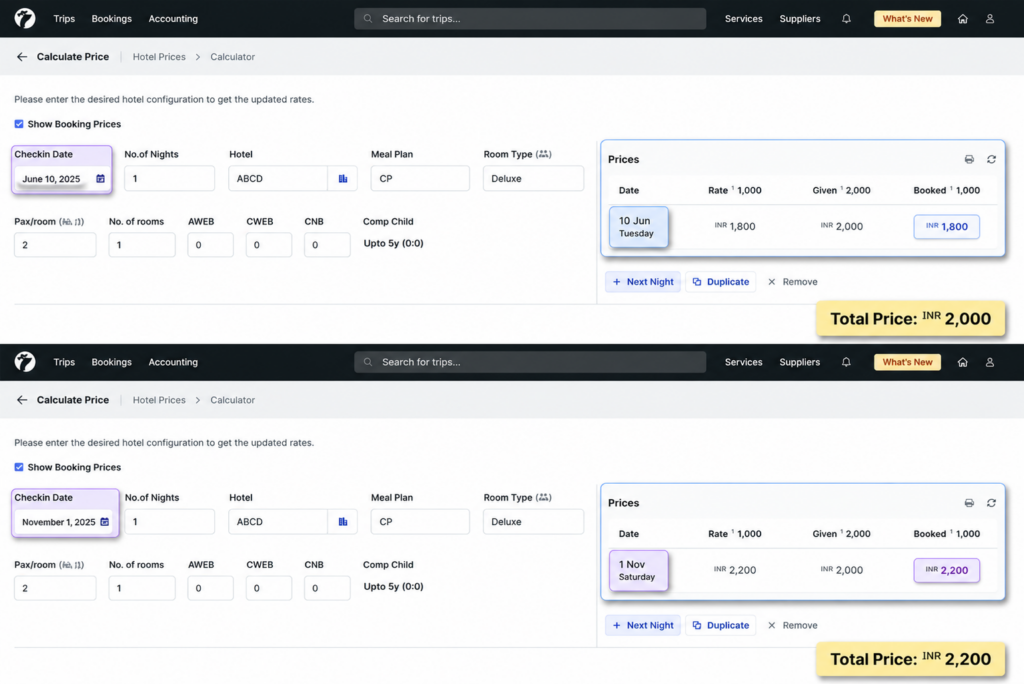
You can create and store all your hotel, transport, and activity-related supplier contracts in the system with all pricing logic built in. This includes seasonality, weekday pricing, break periods, and supplier-wise rates, all configured directly within each contract. So when you build a quotation, the system automatically selects the correct contracted rates based on travel dates.
- One System With Separate Price Visibility For Sales & Operations
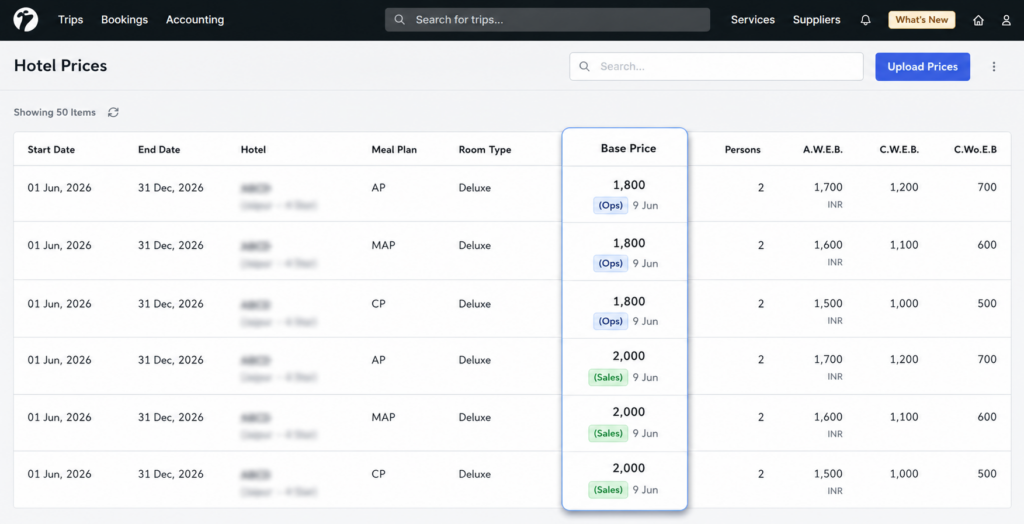
You can control pricing visibility & editing access for the contracted rate sheet separately for your sales and operations teams within one centralised platform. Sales builds quotations from the rates they are provided, and operations confirms bookings from theirs, so each team only sees the rates relevant to their role with no confusion or mismatch.
- Billing Metrics Selected & Transport Cost Auto-Calculated
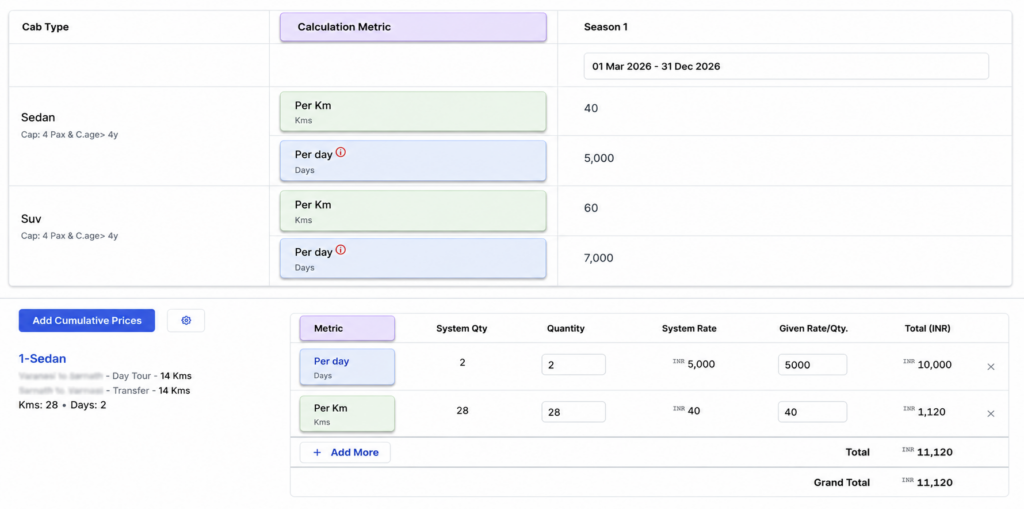
Your team can enter transportation details, including vehicle type, supplier, and route, in the quotation via a dropdown. You can also select a billing metric as per your requirement, whether per km, per service, or per day.
The system can auto-calculate the transport cost based on assigned billing logic. You can also store multiple suppliers for the same route in the system so that your team can quickly compare and choose the best option at the time of building quotations.
Watch What Other DMCs Using Sembark Have to Say: Sembark Client Success Story – Smiling Trips, Founder: Dharun Sharma
The Old vs. Sembark Way
| The Old Way | The Sembark Way |
| Every team member working from a different version of the contracted rate sheet | One centralised, standardised rate sheet across the entire organisation |
| Updating contracted rates means manually editing and re-sharing files across the team | Contracted rates updated in bulk in a few clicks using enable and disable options |
| No control over who edits contracted rate data, & accidental changes go unnoticed | Access controlled by user role, data type, and department |
| Supplier contracts and service details buried in folders and email threads | All contracts and supplier service data stored centrally and found in seconds |
| Wrong seasonal rate applied due to manual date checks | Correct contracted rate auto-selected based on travel date |
| Sales and Ops working from separate uncontrolled contracted rate sheets | Separate price visibility per role within one centralised system |
| Transport billing metric applied manually, with costs calculated by hand | Billing metric selected and transport cost calculated automatically |
Stop Managing It Manually. Start Managing It Right
So now you know that every quotation that went out with wrong rates, every margin loss, every billing dispute, none of these were just a one-off mistake or a bad day at the office. It was the inevitable result of managing supplier-related contracts, rate sheets, and service details manually across folders and files, with no system keeping them in check.
Sembark’s Supplier and Contracting Management gives your team one centralised platform for every contract, every rate, and every supplier detail, with the right controls and automation built in to stop every problem that has become a part of your business operations.
If, after reading this blog, it felt like you were reading about your business, it is time to try a platform you can rely on not just to manage your operations, but also to protect your margins, your relationship with suppliers, and the valuable time of your team.