







What Are Passkeys?
Creating and remembering strong, unique passwords can be challenging. Many users either choose weak passwords or reuse the same password across multiple platforms, increasing the risk of unauthorized access if one account becomes compromised.
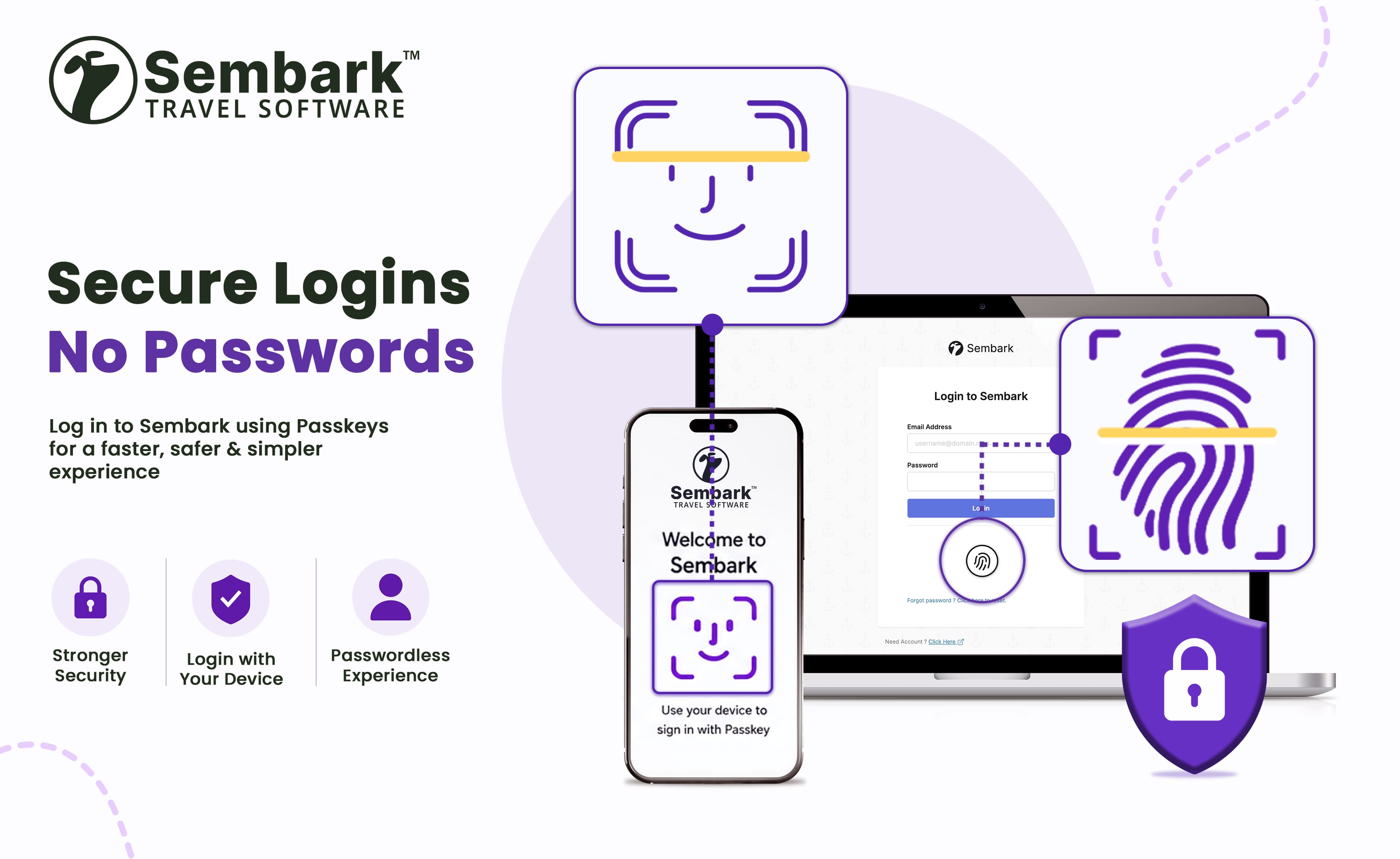
Passkeys provide a more secure and convenient alternative to traditional passwords. Instead of remembering passwords, you can use your device’s built-in authentication methods, such as:
- Fingerprint Authentication
- Face Recognition
- Device PIN
- Security Keys
Passkeys are based on the industry-standard FIDO authentication framework developed through collaboration between major technology providers such as Google, Microsoft, and Apple.
With Passkeys, you can:
- Log in without entering a password.
- Restrict account access to approved devices only.
- Improve account security.
- Optionally disable password-based login entirely.
Requirements
Passkeys use a pair of cryptographic keys:
- Public Key: Stored securely on the Sembark server.
- Private Key: Stored securely on your registered device (Authenticator).
Both keys are required to complete authentication, making Passkeys significantly more secure than traditional passwords.
Types of Authenticators
Roaming Authenticators
Roaming Authenticators can be used across multiple devices.
Examples include:
- Smartphones connected via Bluetooth
- USB Security Keys
- NFC Security Cards
If your computer does not have built-in security hardware, you can often use your smartphone as the authenticator.
Platform Authenticators
Platform Authenticators are built directly into a device and cannot usually be removed.
Examples include:
- Android Phones
- iPhones and iPads
- Windows Devices with Windows Hello
- Mac Devices with Touch ID
Register a Device for Passkey Login
Before registering a Passkey, log in to your account using your existing password.
Steps to Register
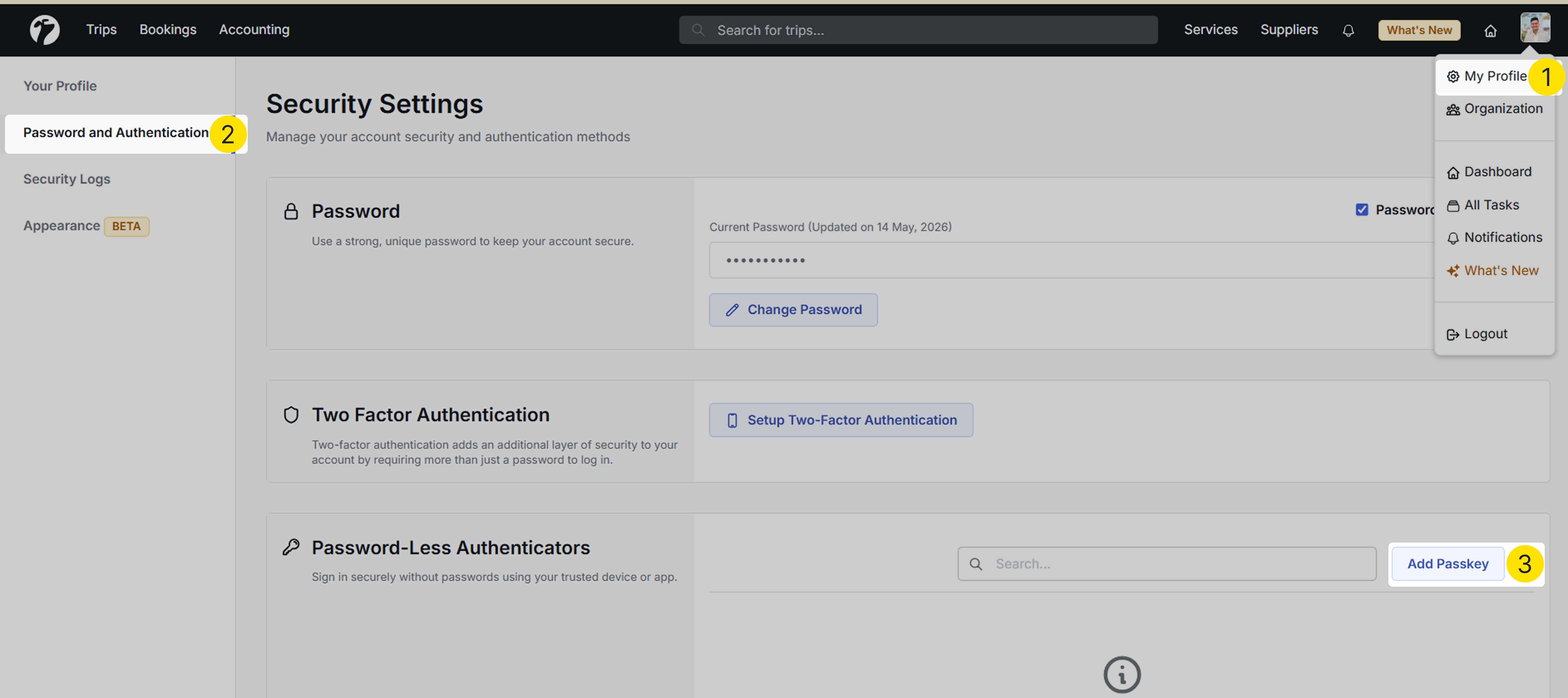
- Navigate to Profile → Password & Authentication.
- Click Add Passkey.
- Click Get Started with Passkeys.
- Follow the authentication prompts displayed by your device.
Device-Specific Instructions
The registration process may vary depending on your operating system, browser, and authenticator.
Please follow the instructions displayed on your screen during the setup process.
Name Your Device
As the final step, enter a friendly name for your device.
Examples:
- Office PC
- Chrome Work Laptop
- Personal MacBook
After completing registration, refresh the page and verify that the device appears in your Passkey list.
Test Passkey Login
After registering your device, it is recommended to test the setup.
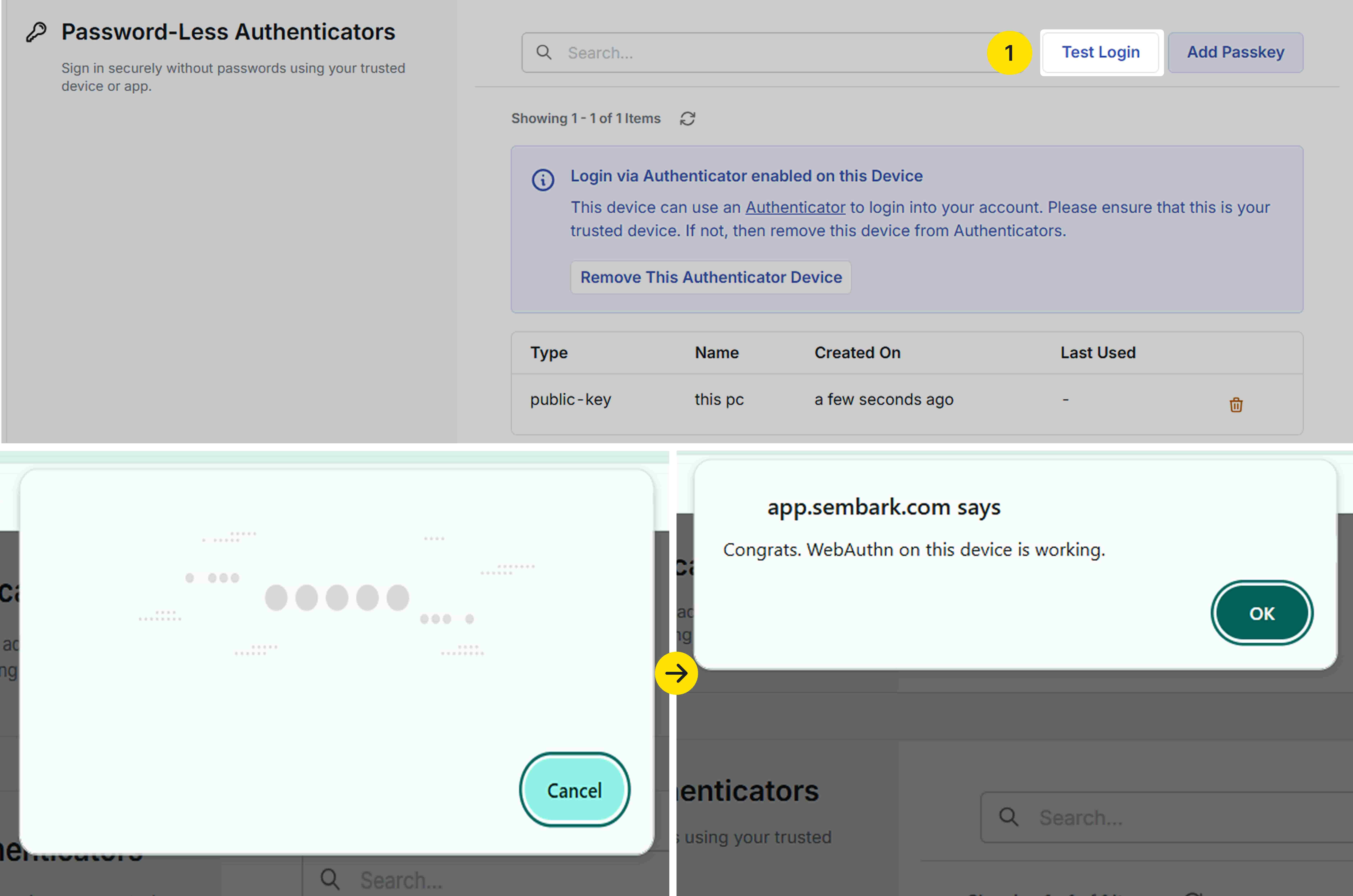
- Click Test Login.
- Complete the authentication process using your registered authenticator.
Once successful, you will receive a confirmation message.
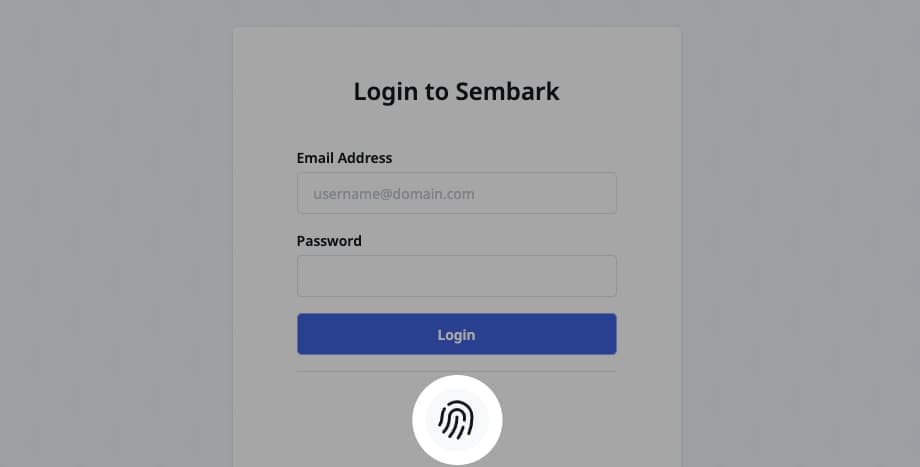
Your login screen will also display the Sign in with Passkey option on that device.
Important Note
Device and Authenticator Must Match
For Passkey authentication to work, the device and authenticator must be the same as the ones used during registration.
If you attempt to log in from an unregistered device, Passkey authentication will not be available.
Disable Password Login (Highly Recommended)

Once all required devices have been successfully registered with Passkeys, an Account Administrator can disable password-based login for a user.
When password login is disabled, the user can only sign in using a registered Passkey from an approved device. This helps organisations ensure that users can access their accounts only from devices that have been registered and approved.
For example, if an administrator wants to restrict a team member to their own laptop or desktop, the administrator can first ensure that the device is registered with a Passkey and then disable password login for that user. The user will no longer be able to sign in using their password and will need to use the Passkey on their registered device.
Benefits
- Prevents password-based attacks by removing password login.
- Restricts access to approved devices registered with Passkeys.
- Reduces the risk of unauthorised access if a password is compromised.
- Provides stronger account security through passwordless authentication.
Important Note
Before disabling password login, make sure that the user has successfully registered at least one required device with a Passkey.
If password login is disabled and the user does not have access to a registered Passkey-enabled device, they may not be able to access their account.
Only Administrators Can Re-Enable Password Login
Once password login has been disabled, only an Account Administrator can re-enable password-based login for that user.
This ensures that users cannot bypass the administrator-defined device access restrictions.
Administrator Access Control
Administrators can manage Passkey settings and password login permissions for team members.
This allows organizations to enforce device-based access policies.
Example Use Case
A company wants employees to access Sembark only from office computers.
In this scenario:
- Employees register their office devices using Passkeys.
- The Administrator verifies the registered devices.
- Password login is disabled for all users.
- Team members can now access their accounts only from approved devices.
This provides stronger security while maintaining a seamless login experience.
Best Practice
For maximum security:
- Register all frequently used devices.
- Test Passkey login before disabling passwords.
- Enable biometric authentication whenever available.
- Avoid sharing devices used for Passkey authentication.
- Keep at least one backup device registered whenever possible.